
Akron Yard Debris Disposal Guide: Storm Cleanup, Bagging, Bundling, or Haul-Away
Yard debris can pile up faster than most people expect.
A storm can leave broken limbs, soaked brush, and scattered branches across the yard. A landscaping project can leave shrub cuttings, root bundles, grass clippings, and mixed outdoor material in more than one area of the property.
What starts as a simple cleanup can quickly turn into a disposal problem.
The easiest way to handle yard debris in Akron is to choose the right disposal path early. Some material can be bagged. Some can be bundled. Some may fit a drop-off or composting route. And some debris is too heavy, too mixed, or too spread out, which is when full yard debris removal becomes the better option.
Quick Answer
After storms or landscaping in Akron, sort debris by type first. Keep leaves separate from sticks and branches. Separate clean yard waste from mixed outdoor debris like broken fence pieces, plastic pots, or other junk. Light, clean material may be easier to bag, bundle, stage, or take to a drop-off route. Heavy limbs, soaked piles, tangled brush, or mixed debris are often better handled through yard debris removal or a larger cleanup option.
Yard Debris Disposal Options in Akron
The best disposal method depends on the type of debris, how much of it is on the property, and how quickly it needs to be cleared.
Many Akron-area cleanups fall into one of these paths:
- bagging loose leaves, clippings, or light yard waste
- bundling manageable branches or brush
- using a local drop-off or composting route for separated material
- scheduling private haul-away for heavy or mixed storm debris
- using a dumpster when the project is large and immediate
This matters because not all yard debris should be handled the same way. A few dry bags of leaves are one kind of job. Wet branches, root bundles, and broken fence sections are another.
Step 1: Clear Safety and Access Areas First
Before you start stacking brush or filling bags, clear the places that affect safety and access.
This helps the property feel under control right away. It also makes the rest of the cleanup easier.
Areas to clear first
Start with:
- sidewalks
- front entry paths
- driveways
- gates
- garage access points
- steps and walkways
- areas around parked vehicles
If branches are blocking a path, move those first. If loose clippings, twigs, or stones are making a walkway slippery, clear them next.
This first pass is not about making the yard look finished. It is about making the property safe and workable.
Step 2: Keep Leaves, Branches, and Mixed Debris Separate
One of the biggest disposal mistakes is mixing everything.
Leaves, brush, branches, and mixed outdoor debris do not follow the same disposal path. Once they are combined in one wet pile, the cleanup becomes slower and harder.
Separate the debris into simple groups
Use these groups:
- leaves and loose clippings
- branches and limbs
- brush and shrub trimmings
- root bundles or heavy natural material
- mixed debris with outdoor junk or broken materials
This step matters because a clean pile of leaves is easier to bag or stage than leaves mixed with sticks, plastic, fence pieces, or stones.
Step 3: Know What Can Be Bagged or Bundled
Some yard debris is easy to prepare. Some is not.
Trying to bag or tie every pile the same way wastes time, especially after storms or larger landscaping jobs.
Debris that is usually easier to bag or bundle
These materials are often easier to stage neatly:
- dry leaves
- grass clippings
- small brush cuttings
- light shrub trimmings
- shorter branches that are easy to stack
This works best when the debris is dry, separated, and not mixed with heavier material.
If the pile is soaked, tangled, thorny, or full of long branches, it may take more time to prepare than it is worth. In that case, larger junk pickup and hauling support may be the more practical route.
Step 4: Know When Drop-Off or Composting Makes Sense
Not every cleanup needs full-service removal.
If the debris is clean, separated, and manageable, some homeowners prefer a drop-off or composting route. This usually works best when the material is natural yard waste only and not mixed with construction scraps, fencing, or outdoor junk.
Good candidates for drop-off or compost-style disposal
These are often easier to handle through separate disposal routes:
- leaves
- grass clippings
- clean brush
- branches without mixed materials
- trimmings from routine landscaping
This route makes the most sense when you have time, access to transport, and material that is already sorted.
If the cleanup is urgent, spread across the property, or mixed with other debris, that advantage disappears quickly.
Step 5: Watch for Mixed Outdoor Debris
Storm and landscaping debris often become more than yard waste.
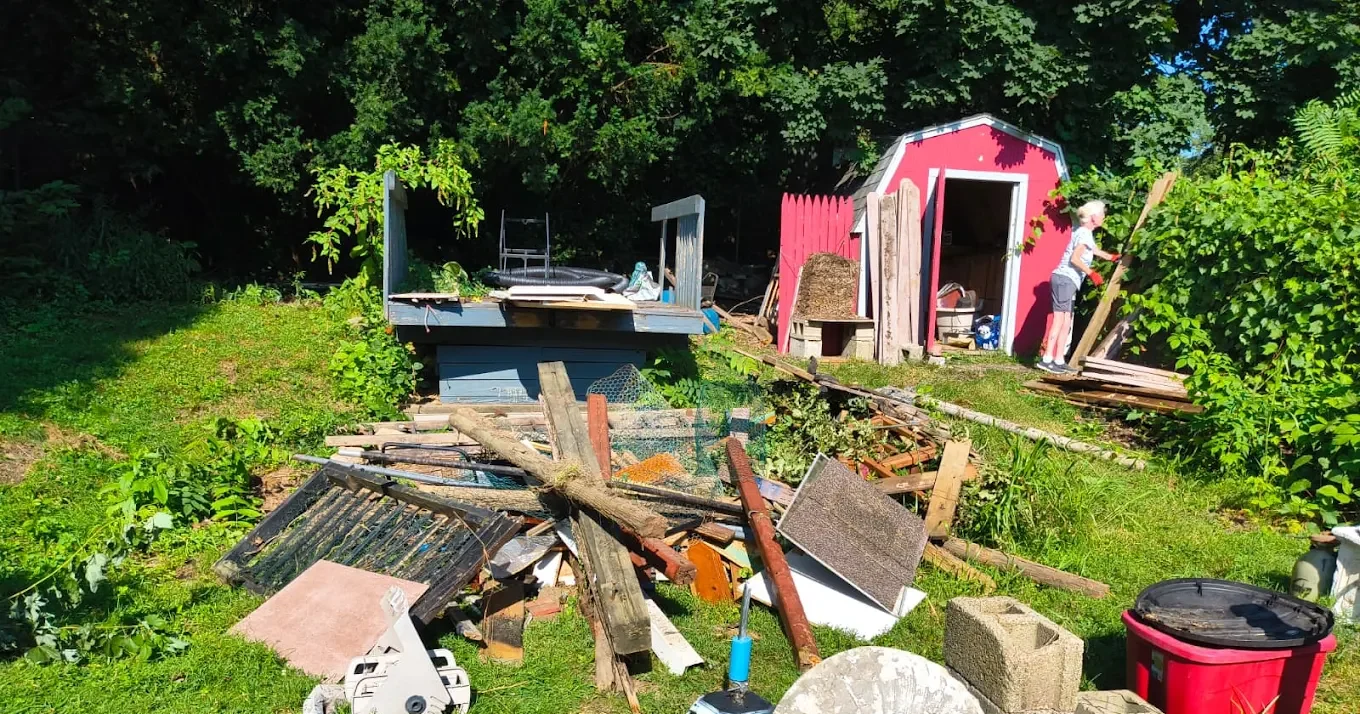
A cleanup pile may also include broken fence boards, planters, outdoor fabric, edging, plastic pots, or trash blown into the yard. Once that happens, the job changes.
Mixed debris needs a different decision
Watch for piles that include:
- broken fence pieces
- planters
- garden edging
- plastic pots
- tarps
- outdoor furniture parts
- trash mixed into the brush
- stones or heavy materials buried in the pile
This is where simple yard waste rules stop being enough. The pile is no longer leaves and branches. It becomes a mixed cleanup job.
That is usually when haul-away starts making more sense than bagging or bundling.
Step 6: Know When Curbside Is Not Enough
Some yard debris can be prepared for simple pickup routes. Some cannot.
The problem is not always the amount. It is often the weight, shape, moisture, or location of the pile.
Signs the cleanup is better suited for haul-away
You may want full removal help when:
- limbs are too heavy to move safely
- brush piles are soaked and compacted
- debris is spread across the front, side, and back yard
- branches are too long or tangled to bundle easily
- the pile includes mixed outdoor debris
- the property needs to be cleared quickly
- the job is too large for repeated trips or staged bagging
This is the point where many homeowners stop making progress. The yard waste is not impossible to move, but it takes more time, lifting, and repeat handling than expected.
If you are also deciding between full-service pickup and a larger self-load cleanup path, compare junk removal vs dumpster rental before choosing the next step.
Step 7: Prepare the Debris Before Pickup Day
Once you know what is leaving, make removal day easier.
A little prep reduces delays and lowers the chance of confusion.
What to do before the crew arrives
Try to:
- keep debris in visible areas when possible
- separate natural debris from mixed materials
- clear a path to the pile
- move vehicles away from tight pickup areas
- keep tools, hoses, and decorations away from debris
- point out anything that must stay
Most delays happen when the pile is blocked, spread out, or mixed with items that are not supposed to leave.
A clean path and a clearly separated pile make the job move faster.
Storm Cleanup and Landscaping Debris Are Not Always the Same Job
Storm cleanup usually creates scattered, uneven debris.
Landscaping cleanup often creates more predictable piles, but the volume can still get large fast. Branches, shrubs, roots, edging, and leftover outdoor material can build up across several parts of the yard.
That is why the smartest move is to sort the debris early and choose the disposal route based on the actual condition of the pile, not just the type of project.
Light, clean, separated material may be worth staging. Heavy, wet, mixed, or spread-out debris usually needs a faster removal path.
Final Thoughts
Yard debris takes up more than outdoor space. It also slows down the whole cleanup.
A pile of limbs by the driveway, a wet brush behind the garage, or mixed debris along the fence can keep a property looking unfinished much longer than it should. The best way forward is to separate the material early, keep leaves and branches apart, and choose the disposal route that actually fits the size and condition of the pile.
If the debris is light, clean, and easy to manage, simple staging may be enough. If it is bulky, wet, mixed, or spread across the property, haul-away is often the better choice.
Need Help After Sorting?
If the yard debris is already sorted and you are ready for lifting, loading, and haul-away, our yard debris removal service can help make cleanup easier. We remove branches, brush, storm debris, and mixed outdoor piles from homes and properties across Summit and Stark Counties.